
Aquarium CO2 calculator: CO2 from KH and pH, drop checker and cylinder life
Enter KH and pH and you get the dissolved CO2 in mg/L. Planted tanks with strong light usually run at 20 to 30 mg/L, and above about 30 mg/L fish start to struggle. Further down: how long a CO2 cylinder lasts and how much a night shut-off saves.
CO2 from KH and pH
Dissolved CO2
28.5 mg/L
Target range for planted tanks
3 × 6 °dKH × 10^(7 − 6.8) = 28.5 mg/L
A drop checker with 4 °dKH solution would settle near pH 6.6 and show green.
Check before you trust the number. The formula assumes carbonic acid is the only acid in the water. Peat, wood, almond leaves, soils that lower KH, nitrate and phosphate buffers all shift the pH, and the table then shows CO2 that isn’t there. A misread of 0.2 pH or 0.5 °dKH moves the result by a third or more. Confirm with a drop checker.
Please enter values within the stated range.
Cylinders for this
Filled cylinders shipped from our warehouse in Poland, buyable online.
2 kg CO₂ cylinder
The 2 kg CO₂ cylinder with filling
- Food-grade CO₂ (E290), 2 kg in a 2.7 L steel cylinder
- Standard W21.8 valve: fits regulators, beer taps and, with our adapter kit, SodaStream Quick Connect machines (Terra, DUO, Art)
- Refill by post through our refill service
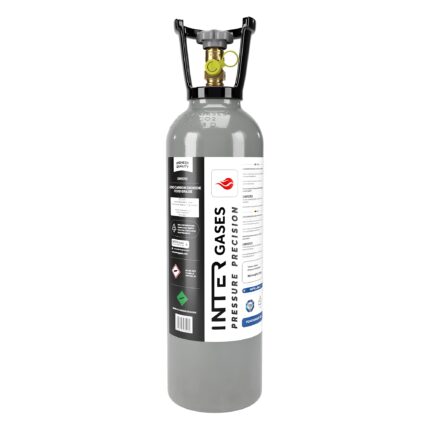 3.75 kg CylinderCO2 E290 Food GradeView product →
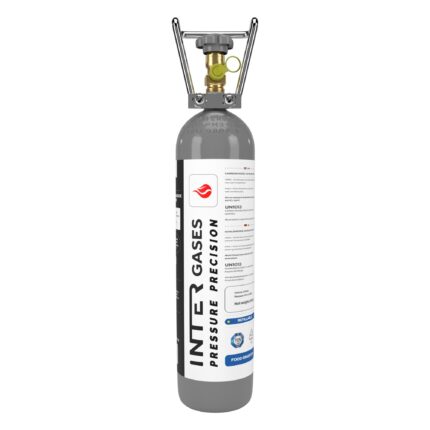 CO2 Cylinder RefillView product →AquariumAll sizes in the shopAll sizes →
Shop by use: CO2 cylinder for aquariums
KH / pH / CO2 table
Dissolved CO2 in mg/L for each pair of KH and pH. Green cells are the 20 to 30 mg/L target, red ones are dangerous for fish. Tap a cell to load it into the calculator.
| KH \ pH | 6.0 | 6.2 | 6.4 | 6.6 | 6.8 | 7.0 | 7.2 | 7.4 | 7.6 |
|---|---|---|---|---|---|---|---|---|---|
| 1 °dKH | 30 | 19 | 12 | 8 | 5 | 3 | 2 | 1 | 1 |
| 2 °dKH | 60 | 38 | 24 | 15 | 10 | 6 | 4 | 2 | 2 |
| 3 °dKH | 90 | 57 | 36 | 23 | 14 | 9 | 6 | 4 | 2 |
| 4 °dKH | 120 | 76 | 48 | 30 | 19 | 12 | 8 | 5 | 3 |
| 5 °dKH | 150 | 95 | 60 | 38 | 24 | 15 | 9 | 6 | 4 |
| 6 °dKH | 180 | 114 | 72 | 45 | 29 | 18 | 11 | 7 | 5 |
| 8 °dKH | 240 | 151 | 96 | 60 | 38 | 24 | 15 | 10 | 6 |
| 10 °dKH | 300 | 189 | 119 | 75 | 48 | 30 | 19 | 12 | 8 |
| 12 °dKH | 360 | 227 | 143 | 90 | 57 | 36 | 23 | 14 | 9 |
| 15 °dKH | 450 | 284 | 179 | 113 | 71 | 45 | 28 | 18 | 11 |
Computed with CO2 = 3 × KH × 10^(7 − pH), rounded to whole mg/L.
How long does a CO2 cylinder last?
The cylinder lasts about
139–192 days
≈ 4.6 to 6.3 months
10.4 to 14.4 g of CO2 per day
Night shut-off with a solenoid valve
Running 24 h a day, the same cylinder would last only 46 to 64 days. Switching the CO2 off for 16 h at night makes it last 3.0 times as long.
Assumption: 13 to 18 mg of CO2 per litre of tank and hour of injection, for a target of about 30 mg/L with a good diffuser. Derived from published runtimes (64 L with a 2 kg cylinder, 10 h a day: 6 to 7 months).
Please enter values within the stated range.
A day in the tank: drop checker and night shut-off
The curve shows how the CO2 level moves over 24 hours, with the solenoid valve on the light timer and with the CO2 running all night. The drop checker on the left follows with about an hour’s delay.

Drop checker colours
A drop checker holds a small amount of 4 °dKH reference solution with bromothymol blue. Only CO2 crosses the air gap, so peat, wood and phosphates don’t fool it. It reacts with a delay of an hour or more, so read it in the afternoon.
- Blue · under about 15 mg/L
Too little CO2 for fast-growing plants. Fine for a low-tech tank. - Green · about 15 to 30 mg/L
Lime green is about 30 mg/L. Keep it a darker green rather than yellow-green. - Yellow · over about 45 mg/L
Too much CO2. Turn the bubble rate down now and watch for fish gasping at the surface.
Values for a 4 °dKH solution, from the pH the solution settles at (blue above pH 6.9, yellow at pH 6.4 and below).
How we calculate
- CO2 (mg/L) = 3 × KH (°dKH) × 10^(7 − pH). One °dKH is 0.357 mmol/L of bicarbonate; the factor 3 folds in the first dissociation constant of carbonic acid.
- Cylinder life = CO2 in the cylinder ÷ (consumption per hour × hours per day). Consumption comes from the bubble rate (0.12 to 0.30 mg per bubble) or from the tank volume (13 to 18 mg per litre and hour).
- Night shut-off: the cylinder lasts 24 ÷ (hours on) times as long as with the CO2 running day and night.
The factor 3 is the hobby convention. With the textbook pK1 of 6.35 at 25 °C the chemistry gives about 3.5, so treat the result as ±15 %. Read the result as a guide, not a measurement.
Sources: 30 mg/L as the safe limit for most fish, 15 mg/L for low-light tanks, drop checker at 4 °dKH (lime green ≈ pH 6.6 ≈ 30 mg/L), night-time build-up and other acids skewing the table: Practical Fishkeeping, “CO2: Striking the balance”. Bubble mass 0.125 mg: JBL ProFlora FAQ. Runtimes 64 L / 128 L with a 2 kg cylinder: Green Aqua blog, “How long does a refillable CO2 cylinder last?”. 2 kg at 2 to 3 bubbles/s, 7 h a day, 3.5 months: UKAPS forum report. Bromothymol blue: yellow at pH 6.0, blue at pH 7.6. Status: October 2026.
Frequently asked questions
Use CO2 (mg/L) ≈ 3 × KH × 10^(7 − pH), with KH in °dKH. At KH 6 and pH 6.8 that is 3 × 6 × 1.58 = 28.5 mg/L. It only holds if no other acid or buffer (peat, wood, phosphate) changes the pH, so check it with a drop checker.
Tanks with strong light and fast-growing plants usually run at 20 to 30 mg/L. Low-light tanks do well at about 15 mg/L, which is also easier on the fish. Practical Fishkeeping puts 30 mg/L as safe for most fish and shrimp; less oxygen in the water lowers that limit.
It depends on tank size, bubble rate and hours per day. A 100 L tank with the CO2 on 8 hours a day uses roughly 10 to 15 g a day, so a 2 kg cylinder lasts about 140 to 190 days. A 500 g cylinder lasts a quarter of that. Use the calculator above for your tank.
With 4 °dKH reference solution: blue means under about 15 mg/L CO2, green about 15 to 30 mg/L (lime green ≈ 30 mg/L), yellow over about 45 mg/L, which is too much for fish. The colour lags the tank by an hour or more.
Yes. Plants take up no CO2 in the dark and give some off, so the level climbs overnight while oxygen falls. A solenoid valve on the light timer switches the CO2 off shortly before the lights go out. At 8 hours a day instead of 24, a cylinder lasts three times as long.
CO2 for your tank
Embed this calculator
You may embed the calculator in blogs, forums and guides for free, without signing up. Please keep the credit line.
Values are guidance. Your test kits, the drop checker and the behaviour of your fish have the last word.


