Blog
CO2 Cylinder for Beer: Which Size, What Pressure and How Long It Lasts
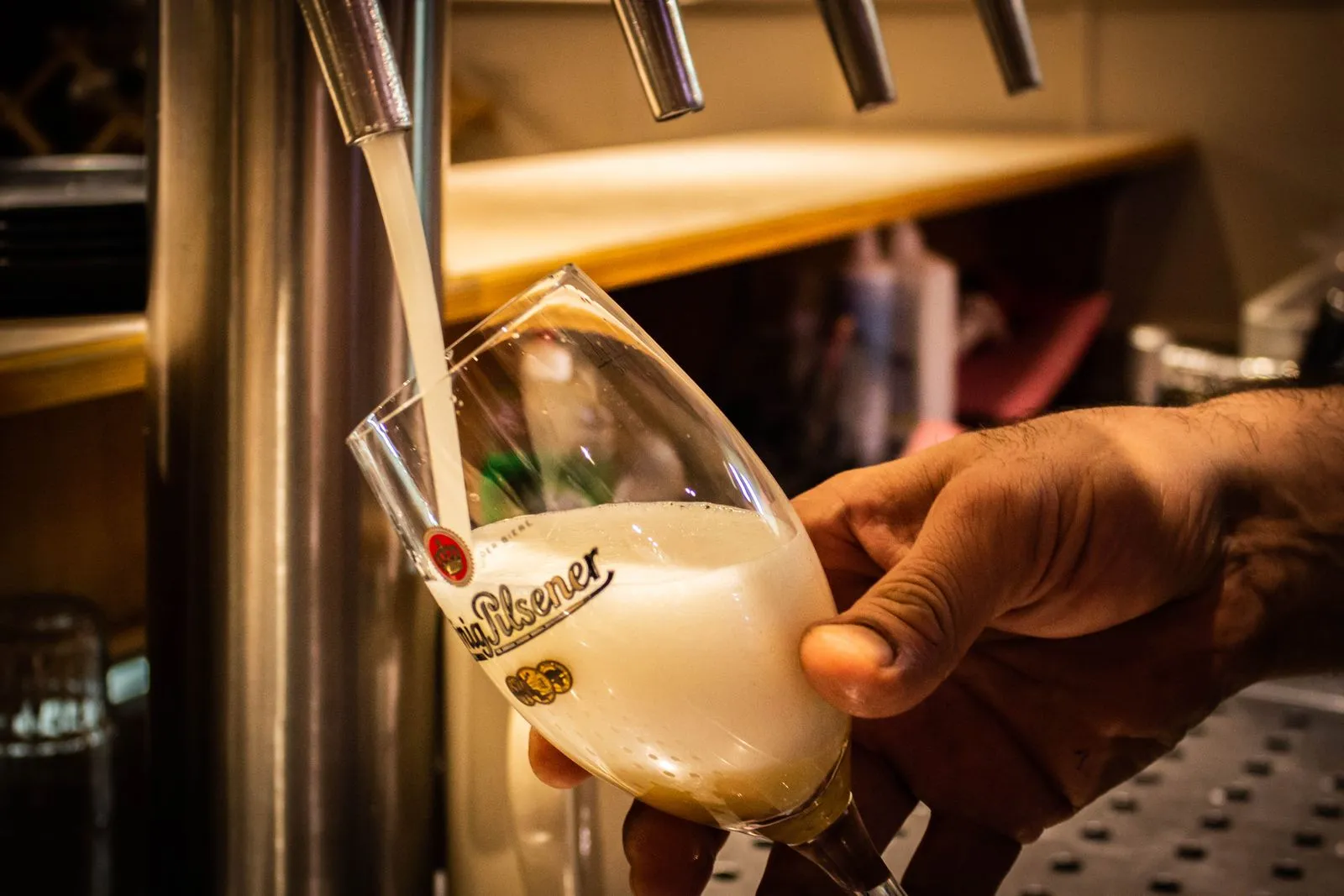
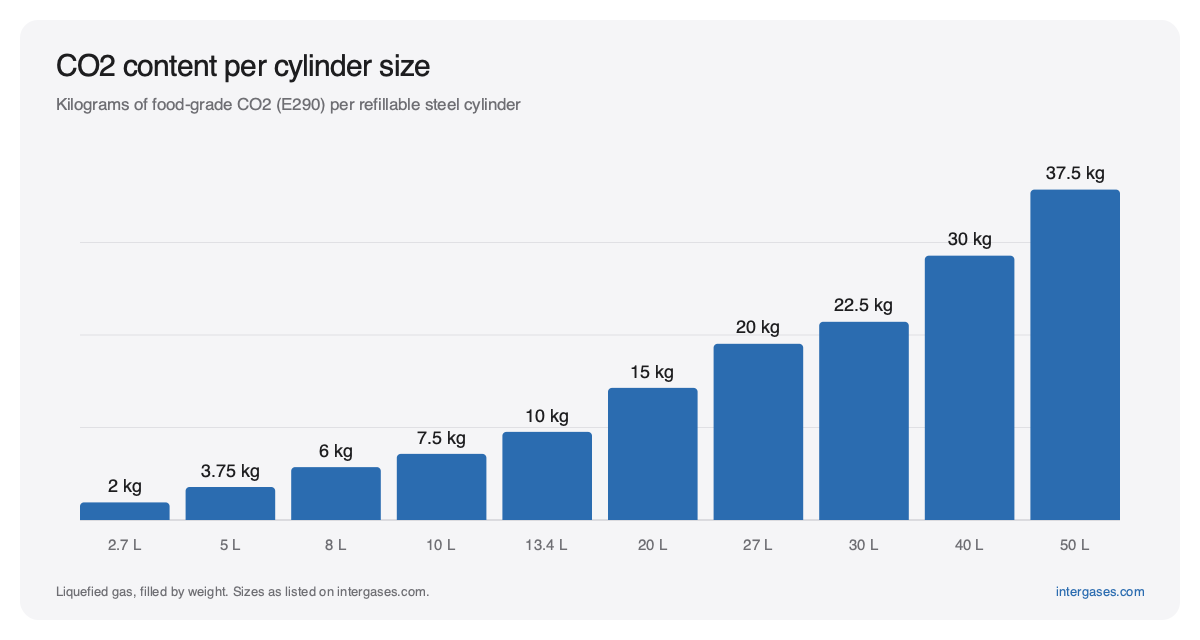
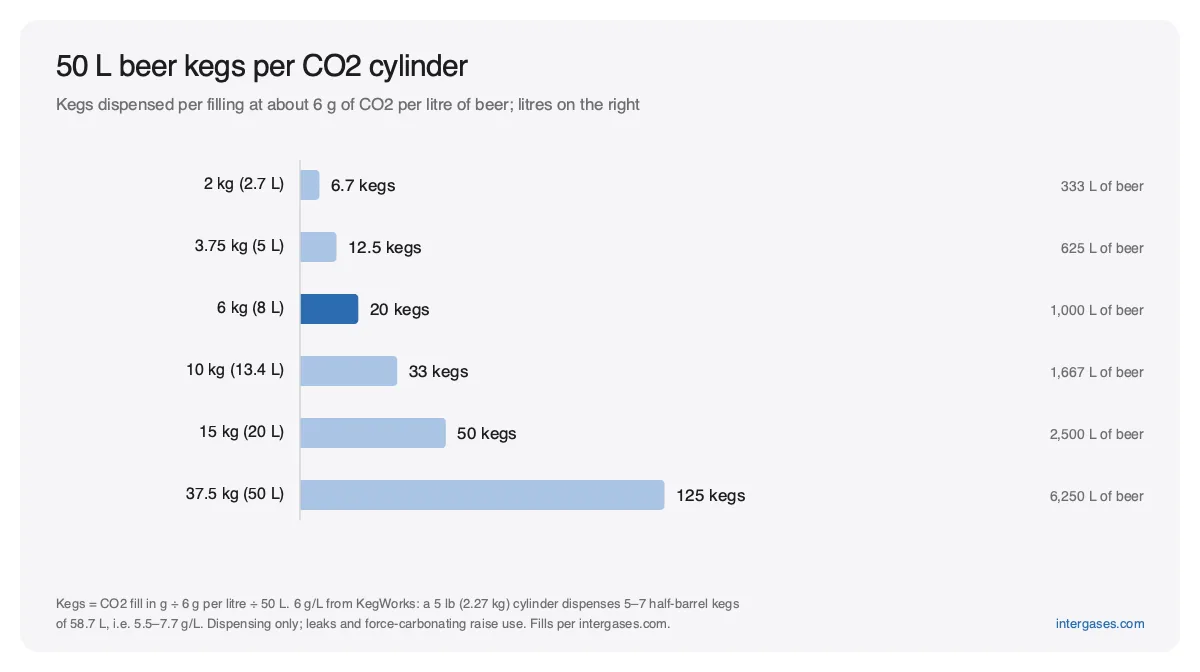
A CO2 cylinder for beer should match how much you pour. For a home bar or kegerator, a 6 kg cylinder (8 L) is the practical choice: at about 6 g of CO2 per litre of beer it dispenses roughly 1,000 litres, which is twenty 50 L kegs. A bar that empties several kegs a week is better served by a 10 kg cylinder, and a busy pub by the 37.5 kg (50 L) size. Set the regulator to about 0.7–1.0 bar for most lagers and ales on a short line, and buy food-grade CO2 (E290), because the gas is in direct contact with the beer.
This guide covers sizes, litres per cylinder, regulator pressure, gas quality, refills and cellar safety.
Which CO2 cylinder sizes suit which bar
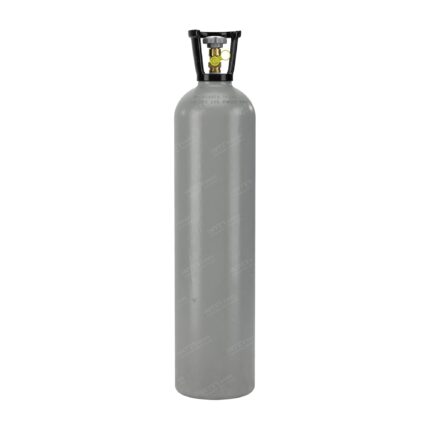
All Intergases CO2 cylinders are refillable steel, filled with food-grade E290 CO2, and have the W21.8 × 1/14″ valve outlet (DIN 477 No. 6) that standard European beer regulators fit. You buy the cylinder: no rent and no deposit.
| Cylinder | CO2 fill | Price | Delivery | Typical use |
|---|---|---|---|---|
| 2.7 L | 2 kg | 49.99 € | Parcel | Party keg, small kegerator |
| 5 L | 3.75 kg | 119.99 € | Parcel | Home bar, compact space |
| 8 L | 6 kg | 149.99 € | Parcel | Home bar, club bar |
| 13.4 L | 10 kg | 199.99 € | UPS (ADR) | Bar, small pub |
| 50 L | 37.5 kg | 399.99 € | Truck (ADR) | Pub, events, several taps |
There is also a 7.5 kg (10 L) cylinder at 159.99 € if 6 kg is a little short for you. The 10 kg cylinder comes in two diameters, Ø180 mm and Ø204 mm, at the same price. The slimmer Ø180 mm version fits more easily into a cooler cabinet or under a counter.
Cylinders up to 8 L ship as ordinary parcels. The 10–13.4 L sizes go with UPS as dangerous goods (ADR), and 20 L and larger by truck freight. Everything ships from our own filling facility in Poland, with an average delivery time of 2–5 business days across the EU.
How many litres of beer a CO2 cylinder for beer dispenses
CO2 use per litre depends on pressure, temperature, line length, foaming and leaks. Draught equipment suppliers publish keg counts per cylinder. KegWorks, a US draught-equipment retailer, lists 5–7 half-barrel kegs of 58.7 L each for a 5 lb (2.27 kg) cylinder in its size chart. That works out as follows:
- 6 kegs × 58.7 L = 352 L per 2,268 g of CO2
- 2,268 g ÷ 352 L = 6.4 g of CO2 per litre (range 5.5–7.7 g/L for 7 and 5 kegs)
We use a round planning figure of 6 g of CO2 per litre of beer, for dispensing only. Force-carbonating your own beer with the same cylinder uses extra CO2 on top of this.
| CO2 fill | Litres of beer (fill ÷ 6 g/L) | 30 L kegs | 50 L kegs | 0.5 L glasses |
|---|---|---|---|---|
| 2 kg | 333 L | 11 | 6 | 666 |
| 3.75 kg | 625 L | 20 | 12 | 1,250 |
| 6 kg | 1,000 L | 33 | 20 | 2,000 |
| 10 kg | 1,666 L | 55 | 33 | 3,333 |
| 37.5 kg | 6,250 L | 208 | 125 | 12,500 |
Two examples:
- Home bar, one 30 L keg a month. 1,000 L ÷ 30 L = 33 months on a 6 kg cylinder, in theory. In practice a small leak at a connector shortens that a lot, so check joints with soapy water after every keg change.
- Small pub, ten 50 L kegs a week. 500 L × 6 g = 3 kg of CO2 a week. A 10 kg cylinder lasts about 3 weeks; a 37.5 kg cylinder about 12 weeks (6,250 L ÷ 500 L).
For the Christmas season, size for your busiest week, not your average one. Running out on a Saturday evening costs more than the difference between two cylinder sizes.
Regulator pressure for draught beer
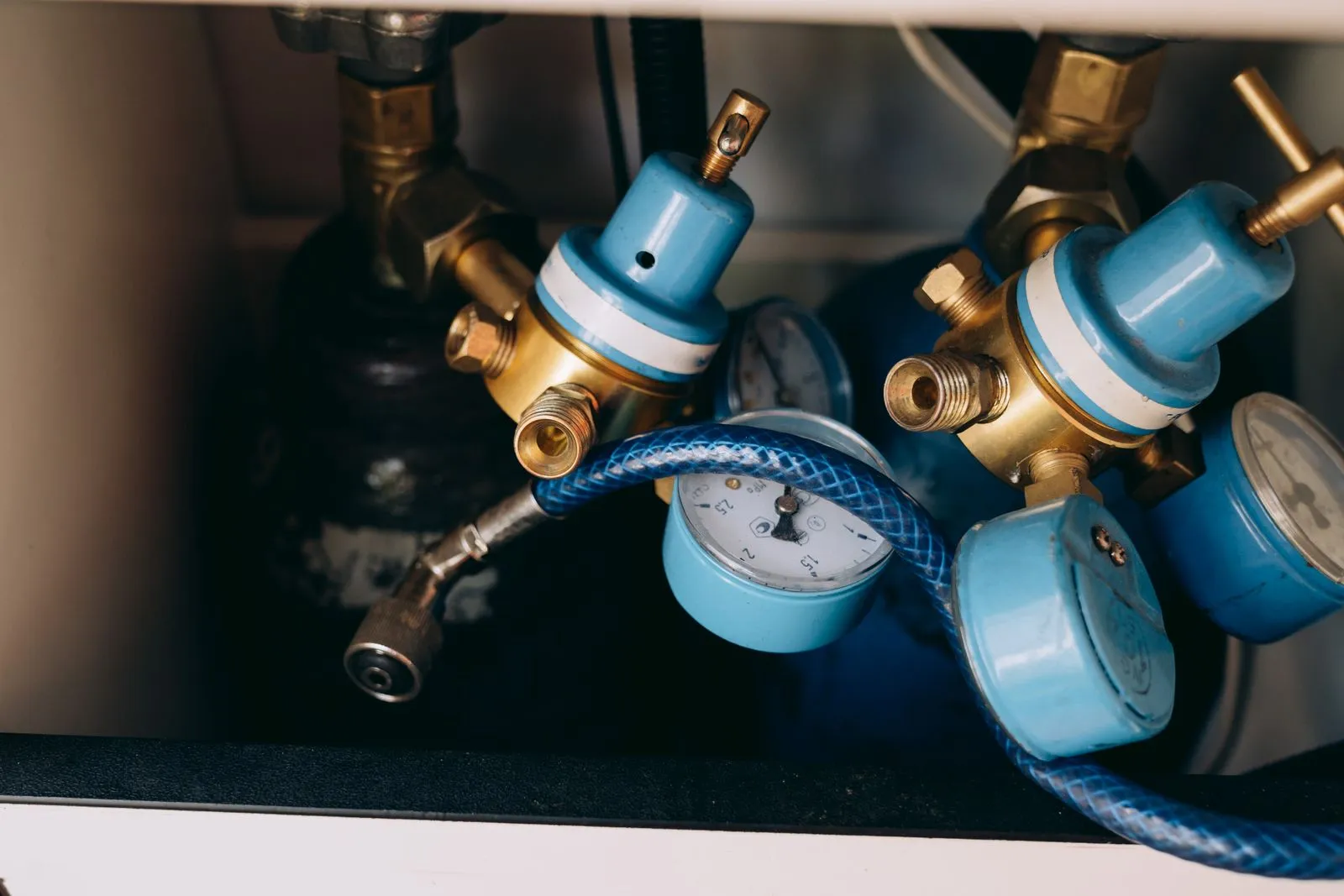
A beer regulator has two gauges. The primary (high-pressure) gauge shows the pressure inside the cylinder. Liquid CO2 keeps that pressure at about 57 bar at 20 °C, regardless of how full the cylinder is, until the liquid is gone. The primary gauge is therefore no fuel gauge: weigh the cylinder instead, or note the date you connected it. The secondary (working) gauge shows the pressure that goes to the keg, and that is the one you set.
Typical working pressures with 100 % CO2:
| Situation | Working pressure | Source |
|---|---|---|
| Most lagers and ales, short line, about 3 °C | 0.7–1.0 bar (10–15 psi) | KegWorks, Micro Matic |
| Wheat beers, Belgian styles, sours | above that range | KegWorks |
| Keg warmer than 3 °C | add about 0.06 bar per °C | KegWorks (1 psi per 2 °F) |
| Nitro stout | 25/75 CO2/nitrogen blend, up to about 2.1–2.8 bar | Micro Matic (30–40 psi) |
Micro Matic, a draught-system manufacturer, recommends about 3 °C (38 °F) as the beer temperature and notes that pure CO2 at kegerator pressures is often not enough for long lines. It adds that higher blended-gas pressures benefit systems longer than about 4.5 m (15 ft); for a kegerator it recommends pure CO2. If your beer foams, check temperature first: a warm keg releases CO2 and no pressure setting fixes that.
Always connect the cylinder upright, secure it against falling with a chain or bracket, and close the cylinder valve when you change kegs.
Food-grade E290 or technical CO2
CO2 that dispenses beer touches the beer, so use food-grade carbon dioxide, the food additive E290. Technical or welding CO2 is not sold as a food additive.
Every Intergases CO2 cylinder, from 2 kg to 37.5 kg, is filled with food-grade E290. Safety data sheets come after purchase and are available on the documents page. A bar that keeps the delivery note and the safety data sheet with its hygiene records can show a food inspector what gas it uses. For the background on food gases, see our guide to food-grade gas cylinders.
Exchange or refill: what makes sense for a bar
When the cylinder is empty, you have two options:
- Exchange: send back an empty cylinder bought from Intergases and receive a full one of the same size. You need the order number of the original purchase.
- Refill your own: any cylinder with a valid test date and a CO2 valve is filled and sent back.
The CO2 refill or exchange for 8–50 L cylinders costs 19.99–119.99 € depending on size; 2 kg and 3.75 kg cylinders are refilled for 19.99–29.99 €. Intergases arranges the transport of large cylinders at a time that suits you. A bar with steady demand usually keeps two cylinders: one on the tap, one full in reserve or on its way to be refilled. The full comparison of costs is in our article on whether to refill, exchange or buy new.
A business that orders four or more cylinders gets volume prices, and EU companies with a valid VAT number are invoiced without VAT. For pubs and event caterers, a pallet of 12 × 50 L CO2 cylinders including the steel transport pallet costs 3,839.99 €. Ask through the business account page for a tailored offer.
CO2 safety in cellars and cold rooms
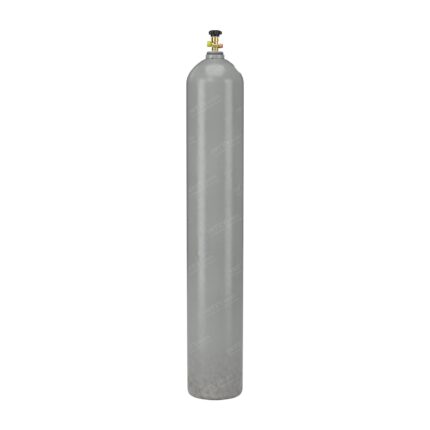
CO2 is colourless, odourless and about 1.5 times heavier than air, so it collects at floor level and in cellars. The German statutory accident insurance rule for beverage dispensing systems (DGUV Regel 110-007) gives a useful reference:
- A full 10 kg cylinder releases about 5.1 m³ of gas. To keep the concentration below 3 % by volume, the room needs about 170 m³ (5.1 ÷ 0.03).
- Above 3 % by volume, protective measures are generally required. A CO2 gas warning system gives a pre-alarm at 1.5 % and the main alarm at 3 %.
- Ventilation: at least two air changes per hour with constant ventilation, or ten per hour triggered by the pre-alarm.
- Cylinders connected for dispensing stand upright and are secured against falling over.
Rules differ between countries, so check what applies to your premises. In practice: do not keep the cylinder in a small closed cupboard or a cold room without ventilation, fit a CO2 alarm at low level where cylinders are stored below ground, and leave a room at once if you feel dizzy or short of breath.
FAQ
How long does a 6 kg CO2 cylinder last in a home bar?
At about 6 g of CO2 per litre, a 6 kg cylinder dispenses about 1,000 litres of beer. If you pour one 30 L keg a month, that is close to three years in theory. Leaks at connectors are the most common reason a cylinder empties much sooner.
Can I use a SodaStream or aquarium CO2 cylinder for beer?
Yes, if it contains food-grade E290 CO2 and you fit a beer regulator to its thread. The Intergases 2 kg cylinder has the standard W21.8 × 1/14″ outlet and food-grade filling, so it works with a European beer regulator. Aquarium cylinders filled with technical CO2 should not be used for beer.
What pressure do I set for lager and for stout?
Most lagers on a short line run at about 0.7–1.0 bar of pure CO2 at around 3 °C. For nitro stouts, Micro Matic names a 25/75 CO2/nitrogen blend at up to about 2.1–2.8 bar (30–40 psi).
Is CO2 from a welding supplier safe for beer?
Only if it is sold as food-grade E290. Welding CO2 is sold as technical gas, not as the food additive E290. Buy E290 and keep the documents with your hygiene records.
Related products
- 6 kg CO2 cylinder – 149.99 €, the home-bar size
- 10 kg CO2 cylinder (Ø180 mm) – 199.99 €, for bars
- 2 kg CO2 cylinder – 49.99 €, also used for SodaStream (see CO2 cylinders for SodaStream)
- 37.5 kg CO2 cylinder (50 L) – 399.99 €, for pubs
- All food-grade CO2 cylinders