
Gas cylinder colour codes: what the shoulder colour means (EN 1089-3)
The colour on the shoulder of a gas cylinder (the curved top) tells you the gas or its main hazard. The European standard EN 1089-3 sets these colours. Oxygen is white, CO₂ grey, argon dark green, nitrogen black, helium brown and acetylene maroon. Other gases take the colour of their hazard: yellow for toxic, red for flammable, light blue for oxidising, bright green for inert. The body colour is not part of the code. The label on the cylinder is the binding marking.
Look up a shoulder colour
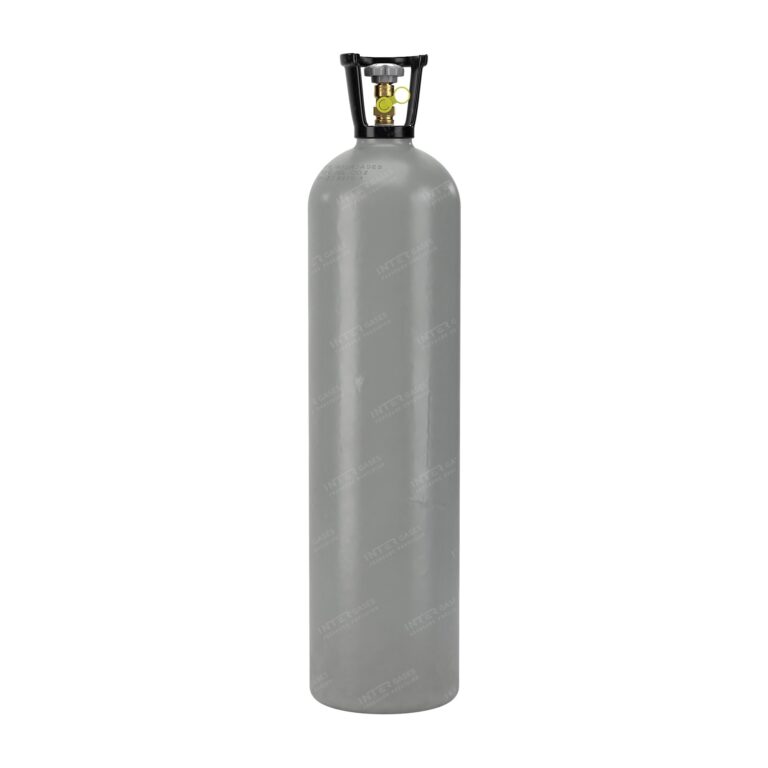
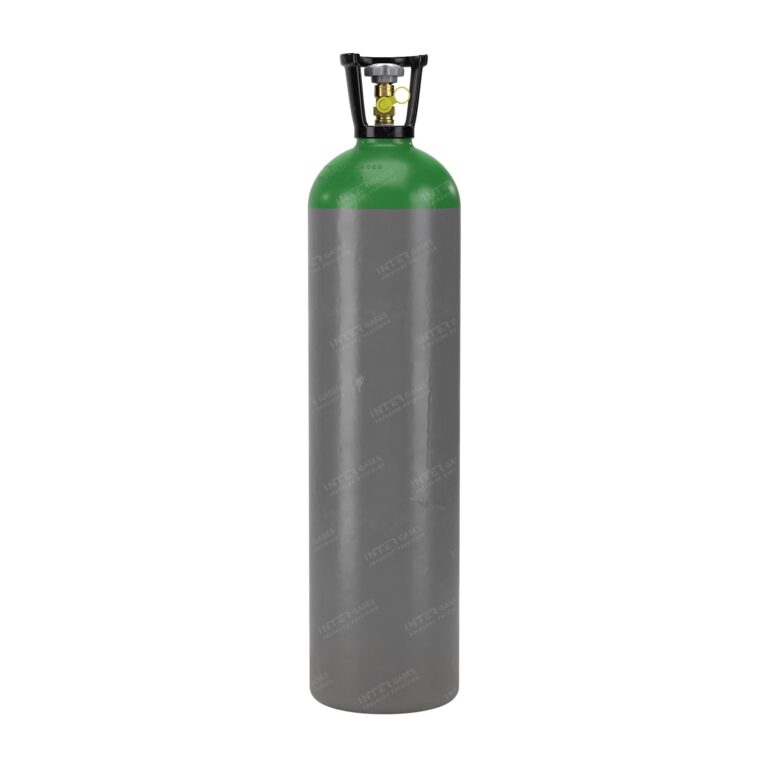
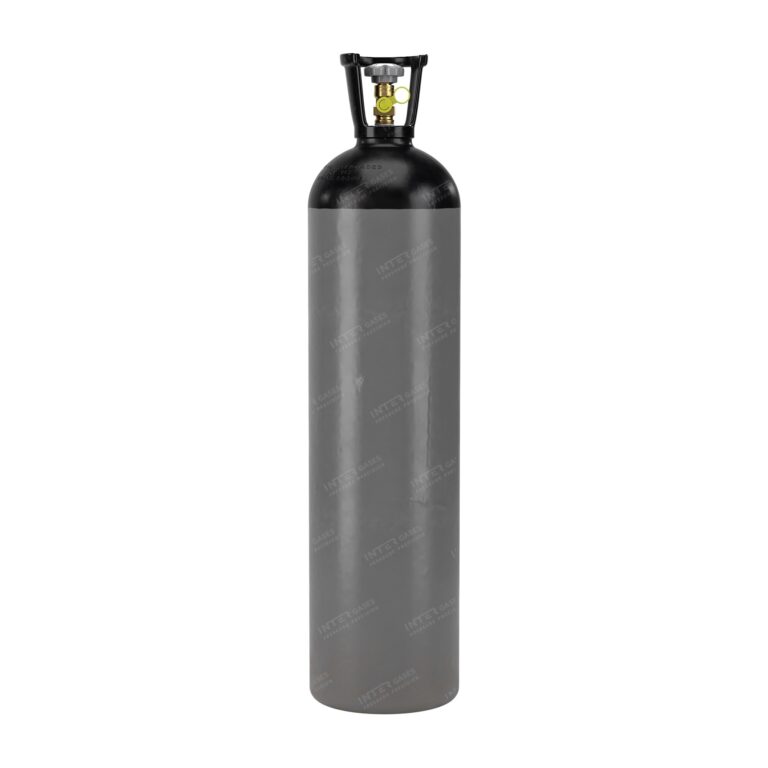
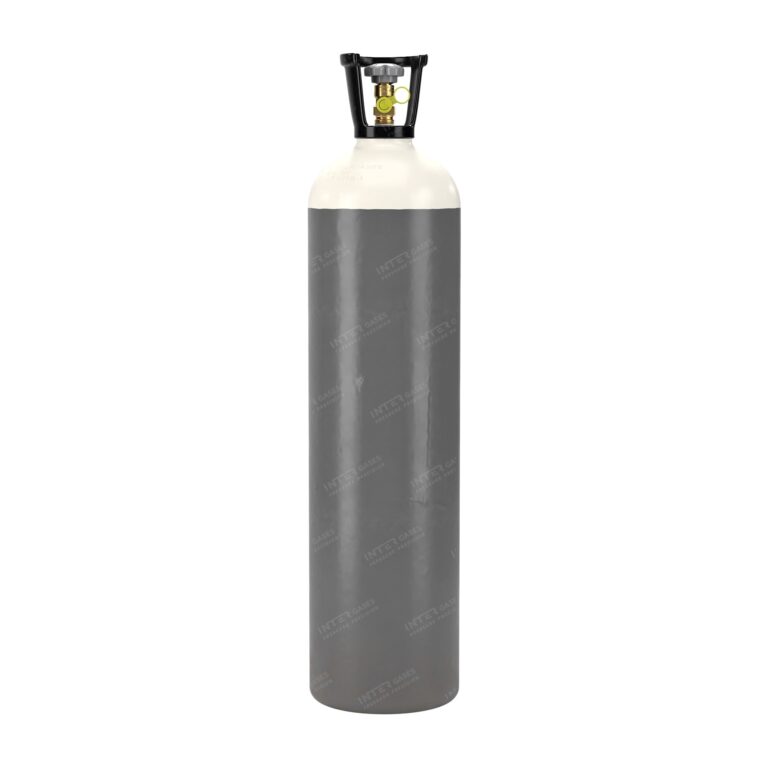
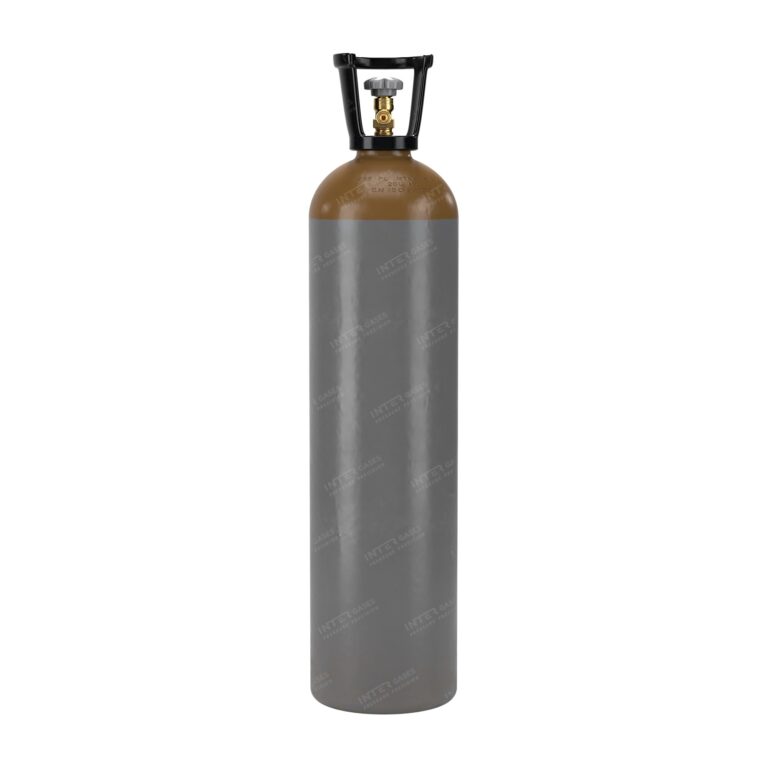
Carbon dioxide (CO₂)
Shoulder colour
RAL 7037 · Grey (dust grey)
The standard gives CO₂ grey, RAL 7037. On industrial cylinders it also allows bright green RAL 6018, the general colour for inert gases. So a green shoulder on a CO₂ cylinder still meets the standard. Medical CO₂ cylinders also have a white body.
Old marking in Germany (before 2006)
Grey (unchanged)
Gases with this shoulder colour
Check the label. It names the gas and is the binding marking. The colour is a second hint.
Cylinders for this
Filled cylinders shipped from our warehouse in Poland, buyable online.
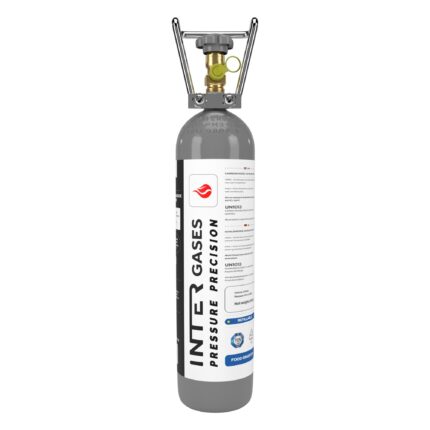
2 kg CO₂ cylinder
The 2 kg CO₂ cylinder with filling
- Food-grade CO₂ (E290), 2 kg in a 2.7 L steel cylinder
- Standard W21.8 valve: fits regulators, beer taps and, with our adapter kit, SodaStream Quick Connect machines (Terra, DUO, Art)
- Refill by post through our refill service
Shop by use: Welding gas cylinders · CO2 cylinder for beer taps
All colours in one table
Shoulder colours under EN 1089-3:2011, the extra colours the standard allows, and the colours Germany used before 2006.
| Gas | Shoulder (EN 1089-3) | Also allowed | Old marking (Germany, before 2006) |
|---|---|---|---|
| Carbon dioxide (CO₂) | RAL 7037 · Grey | Bright green RAL 6018 (industrial) | Grey (unchanged) |
| Oxygen | RAL 9010 · White | None | Blue |
| Argon | RAL 6001 · Dark green | Bright green RAL 6018 (industrial) | Grey |
| Argon/CO₂ welding mixes | RAL 6018 · Bright green | Rings dark green + grey (Ar/CO₂) | Grey |
| Nitrogen | RAL 9005 · Black | Bright green RAL 6018 (industrial) | Dark green |
| Helium | RAL 8008 · Brown | Bright green RAL 6018 (industrial) | Grey |
| Acetylene | RAL 3009 · Maroon | None | Yellow |
| Hydrogen | RAL 3000 · Red | None | Red (unchanged) |
| Compressed air | RAL 6018 · Bright green | White + black (breathing and medical air) | Grey |
| Toxic gases (e.g. ammonia, chlorine) | RAL 1018 · Yellow | Yellow + red, or yellow + light blue (second hazard) | Grey |
Hazard colours for all other gases
| Property | Shoulder colour | Examples |
|---|---|---|
| Toxic and/or corrosive | RAL 1018 · Yellow | Ammonia, chlorine, carbon monoxide, sulphur dioxide |
| Flammable | RAL 3000 · Red | Hydrogen, methane, ethylene, forming gas |
| Oxidising | RAL 5012 · Light blue | Oxygen mixtures above 23.5 % O₂ |
| Inert | RAL 6018 · Bright green | Krypton, xenon, neon, welding mixes, technical compressed air |
| Two hazards | The colour of the main hazard goes on the shoulder. Red (flammable) or light blue (oxidising) may be added as a second colour. | |
| Medical gases | The whole body is white and the shoulder shows the gas colour. Medical nitric oxide in nitrogen (under 1000 ppm) is turquoise blue RAL 5018. |
Screen colours only approximate the RAL shades. The old colours are the ones used in Germany before the EN 1089-3 colours became binding on 1 July 2006. Their shades varied by supplier. Sources: EN 1089-3:2011 (sections 5 and 6, Annex A and D), IGV leaflet on DIN EN 1089-3 (2006), Wikipedia (de) “Gasflasche” for the old colours.
How to read a gas cylinder
- Read the label first. It carries the ADR hazard diamond, the gas name and the UN number, and it is the binding marking. EN 1089-3 calls the colour code a secondary method. It helps you identify the content from a distance, for example in a fire.
- Look at the shoulder. One colour tells you the gas (oxygen, CO₂, argon and so on) or its main hazard. Two colours as rings mean a mixture or a second hazard.
- For industrial gases, the body colour is free. The standard does not set it. German gas suppliers agreed on grey or the shoulder colour, never white. Only a white body has a meaning: medical gas.
- An N on the shoulder, shown twice on opposite sides, marked cylinders repainted in the new colours during the changeover. You may still see it. It does not change the meaning.
- Old colours (blue oxygen, yellow acetylene, dark green nitrogen) were meant to go at the periodic inspection every 10 years. If a cylinder still has them, go by the label.
Sources: EN 1089-3:2011 (introduction, sections 5 to 7, Annex A and D; full text as ÖNORM EN 1089-3:2011 in the Austrian Federal Law Gazette BGBl. II Nr. 458/2011); IGV Industriegaseverband, leaflet “Informationen zur Euro-Norm DIN EN 1089-3” (2006); BG RCI, Sichere Chemiearbeit 02/2007.
FAQ: Questions about gas cylinder colours
Under EN 1089-3 the shoulder is grey, RAL 7037. For industrial CO₂ the standard also allows bright green RAL 6018, the colour for inert gases. The body colour is free. A fully white body would mean medical CO₂.
N stands for new (neu, nouveau). During the switch to the EN 1089-3 colours, cylinders with a changed shoulder colour got an N twice, on opposite sides. In Germany the new colours have been binding since 1 July 2006. The N is no longer needed, and you do not have to remove it.
The shoulder is white, RAL 9010. Before 2006, technical oxygen cylinders in Germany were blue. A cylinder that is white all over holds medical oxygen. A light blue shoulder means an oxidising gas mixture.
Argon has a dark green shoulder, RAL 6001. Bright green RAL 6018 is also allowed. Argon/CO₂ and other welding mixes are inert mixtures, so they are bright green RAL 6018. Argon/CO₂ may also carry two rings, dark green and grey. The label gives the exact mix, for example 82/18.
Only for medical gases. Their body is white, and white bodies are reserved for medical use. For industrial gases EN 1089-3 leaves the body colour open, so you will see grey, black, blue or company colours. The shoulder colour is a hint. The label is the binding marking.
Embed this calculator
You may embed the calculator in blogs, forums and guides for free, without signing up. Please keep the credit line.
Guide only. Colours follow EN 1089-3:2011. National rules and supplier practice can differ, and screen colours only approximate the RAL shades. The label on the cylinder is the binding marking.


